


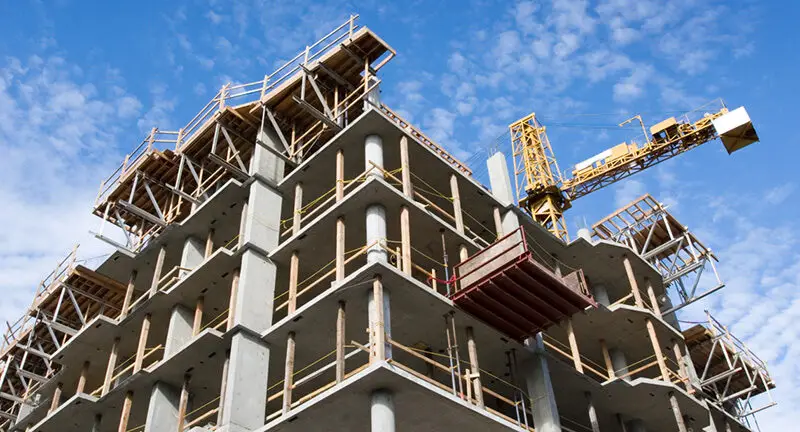
Buildings
Resilience, life-cycle performance, architectural versatility and the building codes that shape sustainable design.
Affordability
Increasingly, the need for affordable housing is presenting a challenge in urban centres. With its intrinsic qualities, concrete presents a long-term solution to meet the needs of owners and occupants.
Architectural design
From roman architecture to modern high rise building and cutting-edge art installations, concrete has been an architectural building material of choice for centuries and continues to prove itself as an innovative, versatile product with endless aesthetic possibilities.
Building codes
Building codes outline the minimum performance requirements for construction materials across Canada, including considerations for structural design, fire safety, and resilience against disaster.
Building health and comfort
The comfort and quality of a building’s indoor environment can be affected by the materials used in its construction.
Building with concrete
Whether you’re designing a single-family residential home, parkade structure, hospital, office tower, or tall hybrid building, concrete is an essential element of nearly every building type.
Contaminated sites and cement solidification/stabilization
Solidification/Stabilization (S/S) with cement is a common method for the safe treatment, management and reuse of contaminated waste.
Operational energy
Thermal performance and operational energy savings over the life cycle of a building are critical aspects of design.
Resilience
The severity and frequency of climate-related events are increasing across the globe, which has necessitated a shift toward mitigative and adaptive design strategies from building to community designs, and beyond.
Sustainable building design
As the most used construction material in the world, concrete has a unique role to play in creating a sustainable built environment.

Sustainabitily Initiatives
There are a number of sustainability-focused resources providing financial support, tools, and guidance to businesses in Canada:
CAC Resources
A selection of key resources from the Cement Association of Canada
Resources
A selection of key resources from the Cement Association of Canada.
Cement and concrete materials
Material standards, performance specifications and carbon accounting for lower carbon cement and concrete.
Best practices for cement and concrete
As the most widely used construction material on the planet, there is a wealth of guidance available through industry associations and member companies across North America.
Carbon accounting, environmental product declarations and tools
An Environmental Product Declaration (EPD) is an independently verified and registered document that communicates transparent and comparable information about the life cycle environmental impact of a product.
CSA Material Standards
In Canada, material standards for construction materials are largely developed through the Canadian Standards Association (CSA).
Low carbon cement and concrete alternatives
Lower carbon concrete is achieved not by any one action, but rather the cumulative effects of many material and design considerations.
Performance-based specifications
Project specifications that are prescriptive in nature often limit the types and quantities of ingredients and material proportions for concrete, which can stifle innovation, increase costs, and limit effective communication and cooperation with local producers.
Research
As codes and standards evolve across Canada, supporting research and testing is constantly being undertaken by industry to profile and demonstrate the performance of cement and concrete materials, from the microstructure of the most basic and innovative ingredients to the durability and resilience of concrete structures.
Transportation infrastructure
Best practices for long-life pavement from design and construction to preservation and maintenance.
Concrete overlays
The overlaying of concrete on asphalt, composite or old concrete pavements provides an environmentally friendly, long-lasting and cost-effective rehabilitation pavement solution.
Construction
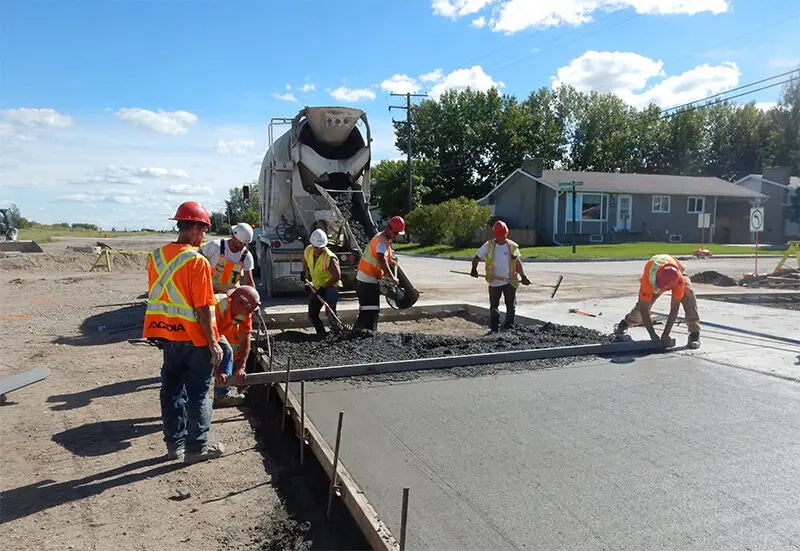
As with any built infrastructure, good construction is key to ensuring a concrete pavement structure performs to expectations. Construction activities for concrete pavements can range from simple, hand-placement fixed form practices, to highly sophisticated operations with fully automated equipment.
Design
Construction costs are regionally variable and fluctuate over time according to a variety of economic factors (cost of raw materials, equipment, labour, etc.). Though every project should be evaluated on a case-by-case basis, concrete highways have an excellent track record as a cost-effective investment.
Economics and benefits of competition
Construction costs are regionally variable and fluctuate over time according to a variety of economic factors (cost of raw materials, equipment, labour, etc.). Though every project should be evaluated on a case-by-case basis, concrete highways have an excellent track record as a cost-effective investment.
Engineered soil
Cement based soil-cement, also known as Engineered Soils, was first used in 1935. Since that time, Portland cement has been used to stabilize soils and aggregates for pavement applications on thousands of kilometres of roadway all over the world.
Interlocking concrete block
Interlocking concrete pavement (ICP) pavers are a versatile, multi-purpose pavement alternative that are becoming a popular solution across many areas in Canada.
Introduction to concrete pavements
Concrete is hard, rigid and durable—it is the traditional material of choice for constructing buildings, bridges and other types of infrastructure. For the same reasons, concrete is also an excellent choice for roads.
Life cycle cost analysis
Life-cycle cost analysis (LCCA) is a tool to determine the most cost-effective option among different competing alternatives to purchase, own, operate, maintain and, finally, dispose of an object or process, when each is equally appropriate to be implemented on technical grounds.
Life cycle assessment and sustainability
In addition to its long-term durability and reduced maintenance, concrete offers several other sustainable benefits over its lifecycle.
Previous pavements
Pervious concrete is a porous medium that allows storm water to drain from the surface to the underlying base and soil structures.
Precast concrete pavement
Precast concrete pavements are a relatively new type of pavement system slowly gaining popularity in North America because of its prefabricated, modular nature, which allows for expedited construction schedules over asphalt and cast-in-place concrete.
Rehabilitation and maintenance
Determining the timing of preservation or rehabilitation activities over the service life of a pavement is critical to ensuring a pavement meets or exceeds its expected performance according to its design.
Roller compacted concrete
Roller Compacted Concrete (RCC) is a durable, economical and sustainable pavement solution, which gets its name from the heavy vibratory and rubber-tired rollers used to compact its final form.
