


What is Carbon Project Budgeting?
Carbon Project Budgeting is an effective way to reduce the embodied carbon associated with a construction project.
A Carbon Project Budget is a tool for tracking and limiting the greenhouse gas (GHG) emissions associated with construction materials used on a construction project.
It helps project teams make informed choices, use lower carbon materials and designs, and meet climate goals—without compromising on quality, safety, or performance.
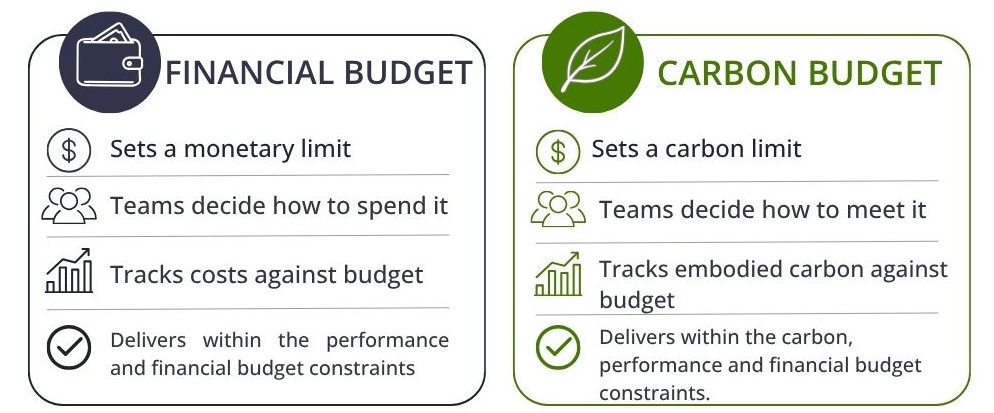
Carbon Project Budgeting works like a financial budget
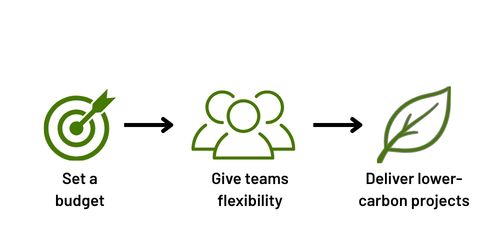
Set the outcome. Give the project team flexibility in how to achieve it.
How Carbon Project Budgeting works
Set the baseline.
Establish the reference point against which carbon performance will be assessed — typically a regional or industry-average carbon footprint.
Set the budget
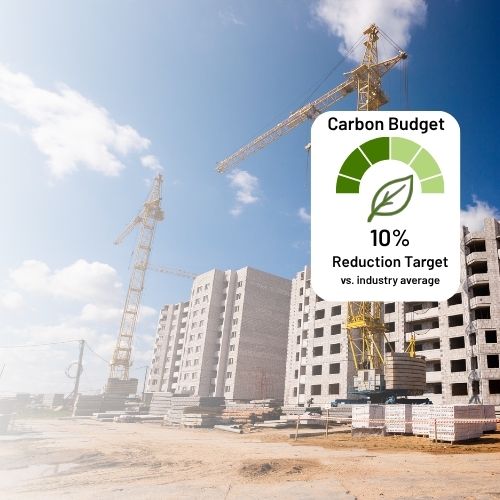
Define the carbon performance target or limit — for example, a 10% reduction below the baseline.

Design to the budget
Optimize materials and design choices to meet the established budget.

Measure and verify
Assess performance against the budget using the applicable methodology and data requirements, such as Environmental Product Declarations (EPDs).
Why use Carbon Project Budgeting?

Lower
carbon
Creates a measurable pathway to reduce embodied carbon.

Maintain Performance
Keeps safety, durability and other project requirements at the centre of decision-making.

Enable innovation
Lets designers, contractors and suppliers determine the best way to meet the target.

Reflect local markets
Uses regional baselines so targets recognize differences in materials and supply chains across Canada.
Who is requiring embodied carbon reductions?
Embodied carbon disclosure and reduction requirements are increasingly being incorporated into government policies, building standards and rating systems, using a range of approaches.

Government of Canada
Federal requirements include embodied-carbon disclosure and reduction for major public building projects.
Federal (Treasury Board Secretariat of Canada) Standard on Embodied Carbon in Construction: This standard applies to federal construction projects. For concrete, specifically see Appendix B: Structural material embodied carbon disclosures and reductions, Table B.1 ready-mixed concrete.

Green building programs
Certification programs such as LEED v5, and the Zero Carbon Building Standards include embodied carbon reduction targets.
Ready to put Carbon Project Budgeting for Ready-Mix Concrete into practice?

Concrete carbon
A practical guideline with case studies for completing a Carbon Project Budget and specifying low carbon ready mix concrete in Canada.

Environmental Product Declarations (EPDs)
The industry average EPDs that contain the GWP of the ready-mix concrete mix designs needed to complete your Carbon Project budget.

Carbon budgeting spreadsheet
The official government of Canada submittal template to meet the requirements of the Standard on Embodied Carbon in Construction for Federal projects. This is a practical tool to use to develop a Carbon Project Budget to assist your project in achieving its reduction target. While designed for federal projects, it can be utilized by any project wishing to use this carbon budget approach. Complete with examples.